My Reflection

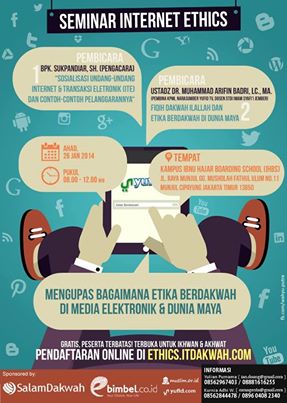
Yuk, ikut Seminar ‘Internet Ethics’ di IHBS

image

**Peserta terbatas, yang lolos seleksi akan dihubungi oleh panitia

Mengupas bagaimana etika berdakwah di media elektronik di.dunia maya

Hari/Tgl Ahad, 26 Januari 2014
Waktu Pukul 08.00 –15.00 WIB
Tempat Kampus Ibnu Hajar Boarding School (IHBS)
Jl. Raya Munjul Gg. Musholah Fathul Ulum No.11 Munjul Cipayung Jakarta Timur 13850

Pembicara
1. Bpk. Sukpandiar, SH. (pengacara) “Sosialisasi undang-unda Internet & Transaksi Eletronik (ITE) dan contoh-contoh pelanggarannya“
2. Ustadz DR. Muhammad Arifin Badri, Lc., MA. (Pembina KP Narasumber Yufid TV, Dosen STDI Imam Syafi’I Jember) “Fiqih dakwah ilallah dan etika berdakwah di dunia maya”

Terbuka untuk ikhwan dan akhawat
Pendaftaran: http://ethics.itdakwah.com/
Gratis, peserta terbatas!

Kontak Panitia:
1. Yulian Purnama (08562967403, 0888 1616 255 / ian.doang@gmail.com )
2. Kurnia Adhiwibowo (08562844478, 0896 0408 2340 / camagenta@gmail.com)

Sponsor:
* Salam Dakwah (salamdakwah.com), situs dan aplikasi untu Smartphone, seperti BlackBerry, Android, iPhone, dan Tablet memungkinkan Anda untuk mendapatkan tayangan video ka audio kajian, forum islami, jadwal kajian dan artikel
* E-Bimbel (ebimbel.co.id), solusi praktis untuk percepatan pembelajaran berbasis ICT di era digital. Insya Allah mampu memberikan efektivitas dan interaktivitas untuk pembelajara baru, berkualitas, mudah serta menyenangkan
* Muslim.Or.Id, situs islami yang berupaya menebarkan sun memurnikan aqidah
* Rumaysho.com, situs islami yang mengenalkan ajaran Islam lebih dekat
* Yufid (yufid.org), tim kreatif di bidang pendidikan dan dakw telah menghasilkan banyak produk dan konten Islami.

Lectures of Life, My Reflection, Teacher's Professional Development

Integrate Poverty Topic in ELT to Promote Character

Mierza's ICCE Pic 2011Well, this is my first presentation in international conference which is not language-related. I was interested with the ‘character improvement’ of my students, so I tried integrating poverty issues in my ELT (English Language Teaching). I was astonished since the lessons even taught me that I knew nothing about poverty. I learnt a lot from my students who have been living around and struggling to get out of it.

So, I tried to share to the world what we had done in the classroom and as a school system since at the moment the school also integrated the pillars of character. Surprisingly, most of the audience had no clue that the characters of the students would be best cultivated if it is part of the school system – more than just daily interventions.

Alhamdulillaah, I was fully supported by the school to present my paper there. Here are the slides and papers that I presented at the International Conference of Character Education held in University of Yogyakarta.

Englicious Resources, My Reflection, Teacher's Professional Development

Incorporating Global Warming Issues in ELT

This is my second presentation slides and presentation which happened to be my first ‘appearance’ at an international conference. The event was organized by TEFLIN and UPI Bandung on November 1-3, 2010. The paper itself was actually a continuation of the research I had made as presented at Ma Chung University.

Surprisingly, at that conference, I won the Alwasilah-Teflin Award as the best paper! Alhamdulillaah, I (who happened to be expecting my second child at that time) could bring home Rp 1.000.000 from the conference. I supposed that it was the gift for my baby. 🙂

The Presentation

The Paper 

Englicious Resources, My Reflection, Teacher's Professional Development

Promoting Environmental Sustainability in EFL Classroom

This is my first presentation and paper written to be presented at Ma Chung University on National Conference of Literature and Language Teaching (NACOLLIT) in 2010. It was also the first time for me presenting and talking in front of different audience, i.e. not my own students. 🙂 But then, alhamdulillaah, Allah gave me the strength and courage to move on. And now, I am addicted to share more.

The Slides

The Paper (ISBN 978-979-17959-6-8)

Lectures of Life, Muslimah Session

Jadi Muslimah Berahlak Baik itu COOL!

Bismillaah…

Berikut ini slide yang pernah dibuat untuk dipresentasikan pada Muslimah Session atau sesi kajian muslimah di sebuah sekolah menengah umum. Semoga bermanfaat.

Lectures of Life, Teacher's Professional Development

Manajemen Pendidikan Islam: Catatan Daurohku

Tulisan ini bertujuan untuk berbagi materi dari sesi “Daurah Khusus Para Pendidik dan Pengelola Lembaga Pendidikan Islam” di Masjid Al-Barkah, Cilengsi pada tanggal 1 Januari 2014. pukul 09:00 – 15:00 WIB. Oya, catatan saya sebelumnya pernah  menampilkan informasi daurah pada  blog ini juga di http://goo.gl/fYtKKw . Pemateri daurah ini adalah  Ustadz DR Erwandi Tarmizi, M.A. yang membawakan materi “Manajemen Pendidikan Islam” dan Ustadz Kurnaedi, Lc. yang membawakan materi “Bingkisan Istimewa untuk Para Pendidik Generasi Islam”. Catatan ini tidak selengkap daurahnya tentu saja. Beberapa bagian gagal terdokumentasi karena beberapa gangguan konsentrasi seperti kelaparan, kebingungan, kefakiran ilmu, dan panggilan alam… hehe… 
 
InsyaAllah, saya tampilkan tautan ke situs yang akan menayangkan video atau catatan daurah yang komplit di masa yang akan datang, jika ada dan sudah diunggah panitia daurah tentunya.
 
Bismillaah….
 
Kesan Pertama Begitu Menggoda
Alhamdulillaah,  kesampaian juga menghadiri daurah setelah pindah ke peradaban 6 bulan yang lalu. Didaulatlah Masjid Al  Barkah Cileungsi sebagai tempat perdana mengkaji ilmu setelah sekian lama berencana (padahal niatnya aja yang  kurang -_-). 
 
Kesan pertama begitu menggoda. Masjid dua lantai ini nampak rapi tanpa pedagang  dan sampah. Pedagang dilokalisasi di gang sebelah masjid dan kios-kios depannya, sedangkan sampah tentunya dilokalisasi di tempat sampah.. hehe… 
 
Acara dijadwalkan dimulai jam 9.00 dan saya datang  15 menit  sebelumnya. Tapi, subhanallaah, bahkan belum dimulai pun sudah banyak yang hadir. Di  depan meja panitia terlihat antrian akhwat yang menunjukan surat pengantar dari lembaga untuk bisa masuk demi ilmu gratis ini. Kami hanya ditawari kupon infaq makan siang seharga Rp 10.000. Terlihat panitia yang sigap membagikan plastik untuk membungkus alas kaki kami karena penuhnya tempat penitipan. 
 
Setelah menuliskan nama di daftar peserta, cepat-cepat saya naik ke lantai 2 untuk memasuki ruangan khusus akhwat. Wah, saya harus puas mendapatkan shaf tengah,  barisan kesepuluh sepertinya. Weleh, menyesal juga tidak datang lebih pagi. Acara  dimulai tepat waktu  dengan jumlah partisipan yang memenuhi ruangan pukul 9 itu. Ngga ada tuh,  stereotip “Late is Our Nature” disini. Everything starts  punctually.
 
Nah, satu hal lagi yang membuat takjub adalah toiletnya yang sama-sama terletak di lantai 2. Awalnya sempat ragu sebentar untuk masuk tempat wudhu dan toiletnya karena terlintas  stereotip toilet umum yang tidak bersih.  Tapi,  berhubung sudah dipanggil,  saya beranikan diri sesungguh hati untuk memasukinya (halah!). 
 
Dan ternyata, saudara sekalian,  toilet dan tempat wudhu di sana jauh dari stereotip tadi.  Lantai luarnya yang kering dan bersih membuat akhwat yang datang bisa leluasa mengenakan kaus kakinya.  Terdapat gorden khusus kamar mandi tebal yang membatasi area kering dan tempat wudhu.  Tempat  wudhu dan toiletnya sangatlah bersih dan terjaga kesuciannya. Bahkan, kloset  duduknya bersih dari tapak kaki, kering, dengan flush yang berfungsi (huwaw!)  – hal yang sulit ditemukan di toilet umum. Subhanallaah,  inikah cerminan muslim sesungguhnya  yang murni mengikuti  Quran dan Sunnah? Typeless jadinya…


SESI 1: MANAJEMEN PENDIDIKAN ISLAM

Sesi yang dibawakan Ustadz DR Erwandi Tarmizi, M.A. dengan moderator, yang saya lupa namanya, berlangsung seru karena sifatnya yang lebih ke sharing. Beberapa solusi didapatkan pula dari sesi yang berlangsung interaktif ini. Sayangnya, selama 30 menit pertama, sistem audionya kurang mendukung.. hihiks… 
 
Dalam 30 menit itu, beberapa statement sempat terdengar. Seperti “Anak-anak memiliki titik kelemahan bisa jadi kelebihan dan sebaliknya.” Intinya, pendidik generasi Islam seharusnya mampu menggali lebih lanjut. Terdengar juga kalimat yang menyatakan “Ilmu yang paling utamanya adalah ilmu dari Allah”, namun kurang jelas konteksnya apa.. mohon maaf… -_-.  Yang terakhir adalah satu pernyataan yang sangat saya suka yaitu “Sistem pendidikan Islam  seyogyanya bisa diakses seluas mungkin oleh seluruh kalangan.” 
 

Menyoal Kurikulum

Catatan khusus ya… sesi ini juga masih agak-agak kurang terdengar. Jadi, mohon maaf jika kurang lengkap. Nah, disini moderator mengangkat isu mengenai porsi pendidikan agama. Bagaimana seharusnya sebuah sekolah Islam ‘membagi’ porsi agama di tengah tuntutan kurikulum? Ust. Erwandi menjawab bahwa anak-anak sangat baik jika diajari Bahasa Arab di awal usianya untuk mampu memahami Al Quran. Beliau mengutip perkataan Ibn Khaldun yang menganjurkan agar anak-anak terlebih dahulu diajarkan bahasa Arab sebelum ilmu-ilmu yang lain, karena bahasa adalah merupakan kunci untuk menyingkap semua ilmu pengetahuan. Menurut pandangan Ibn Khaldun, mengajarkan al-Qur’an  mendahului pengajarannya terhadap bahasa Arab akan mengkaburkan pemahaman anak terhadap al-Qur’an itu sendiri karena anak akan membaca apa yang tidak dimengerti. 
 
Selain itu, ada poin penting yang Ust. Erwandi tekankan melihat fenomena menjamurnya SDIT, TKIT, dan IT-IT lainnya di Indonesia dengan beragam ‘kelebihan’ yang ditawarkan, seperti hafal berapa juz sampai menjanjikan untuk menjadikan si siswa ilmuwan dan ulama sekaligus di masa depan. Sayangnya, sekolah-sekolah (dengan beragam bobot kurikulum yang diusungnya) ini cenderung memberi beban berlebihan kepada anak. Beliau bertanya kepada hadirin ,(Subhanallaah… Bertanya? Betapa tawaddhu-nya  ustadz yang bergelar doktor ini) adakah seorang tokoh yang menjadi pakar dari dua ilmu yang berbeda: ilmu sains dan ilmu syar’i? Beliau memberi contoh Imam Nawawi yang tatkala belajar ilmu kedokteran memiliki kesulitan belajar ilmu syar’i. Disini, Allah menutup pintu mempelajari yang satu dan membuka yang lain.
 
Takhosus atau spesialisasi adalah hal yang perlu diterapkan. Untuk mempelajari ilmu syari diperlukan orang jenius.  Karena orang yang mempelajari ilmu syari harus mampu mengeluarkan hukum syar’i.  Seperti Rasulullah mengatakan, “Umatku yang paling menguasai ilmu Faraidh adalah Zaid Bin Tsabit” (HR. Hakim). Ustadz juga menyebutkan nama-nama lain yang mumpuni dalam hal khusus, namun tidak dapat saya tangkap sempurna – maafkan… Intinya, jangan bebani anak dengan banyak hal atau banyak pelajaran.  Arahkan anak sesuai minatnya.  Islam memperhatikan individualisasi dalam mendidik. Janganlah pula dipaksakan yang kita mau.  Jika sekolah formal ingin memasukkan ilmu syar’i,  jangan bebani anak dengan ilmu baru.  Integrasikan ilmu syar’i ini dalam dalam pelajaran. Beliau menyebutnya sebagai kurikulum tersembunyi.
 
Ustadz lalu berujar bahwa guru agama sangatlah berpengaruh besar. Beliau mengisahkan seorang guru agama yang dipindahkan jadi guru kesenian karena dinilai terlalu berpengaruh. Ketika ia ditanya seorang anak apakah gambar yang dihasilkan bagus atau tidak, dia tidak bilang bagus. Lalu, anak itu diarahkan untuk mengenal Allah yang ‘lukisan’-nya jauh lebih indah. MasyaAllaah…
 
Kemudian, Ustaz Erwandi memaparkan kondisi Saudi Arabia dimana beliau menyekolahkan kedua anaknya disana. 6 tahun lalu,  di Saudi Arabia,  mulai diterapkan kurikulum yang memulangkan anak jam 12 serta dibebani sesuai kemampuan anak. Kondisi psikologi mereka sangat diperhatikan. Dan, (ini bagian yang saya sukai) sama sekali tidak ada test hingga akhir masa sekolah dasar! Hal ini membuahkan hasil dalam pencapaian pendidikan yang membuktikan bahwa jika terlalu banyak hal yang diajarkan (dan dihapalkan – saya) hasilnya NOL. Tidak ada yang tercapai: tidak jadi ilmuwan, tidak pula menguasai ilmu syar’i. 
 
Sesi kurikulum ditutup dengan pertanyaan,  adakah siswa disekolah hadirin yang hapal 10 juz dan dapat nilai mafiki 10. Kemudian,  8 orang mengangkat tangan.  Salah satu peserta yang ditanyai mengatakan 4 dari 8 orang anak memenuhi syarat pertanyaan itu. Ternyata,  dalam setiap pelajaran diselipkan pembelajaran dari ayat-ayat  Quran  dan sunnah Rasulullah yang sebelumnya disebut Ust. Erwandi  sebagai kurikulum tersembunyi.
 
Sesi pertanyaan pun dibuka. Sepertinya banyak pertanyaan yang diajukan. Namun karena kondisi pribadi (harus ke toilet yang ternyata antri – maaf) maka saya hanya bisa menuliskan satu saja yang bisa saya tangkap.
 
Satu penanya berasal dari Banjarmasin (masyaAllaah). Ibu itu bertanya mengenai pemaduan  kurikulum barat dengan Islam. Ustadz menanggapi bahwa jika ingin memadukan kurikulum, pastikan harus orang berilmu. Terkadang apa yang kita anggap baik belum tentu baik. Karena itu, alangkah baiknya jika sekolah yang memiliki keperluan penggabungan kurikulum barat dan Islam untuk memiliki dewan syariat untuk memutuskan perkara  ini. Sesi kurikulum pun berakhir dengan satu pernyataan dari moerator bahwa diperlukan waktu yang lapang untuk membahas hal ini. 
 

Tentang Guru

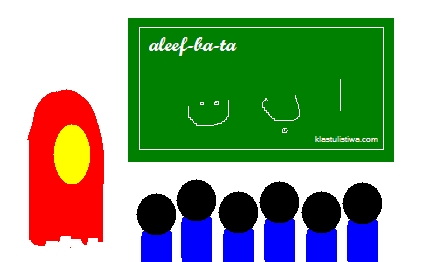
alifbataSub sesi kedua dengan Ustadz Erwandi pun dibuka. Beliau menekankan para guru (termasuk beliau) harus terus menerus memperbaiki diri, karena gurulah yang pertama kali dilihat dan dirujuk oleh siswa. Disadari atau tidak, siswa memperhatikan dan meniru gurunya. 
 
Hal yang pertama kali harus dijadikan perhatian oleh manajemen sekolah Islam ketika merekrut guru adalah suluk dan akhlak dari kandidat sambil menyesuaikan persyaratan akademik. Namun, jika manajemen sekolah menemukan dan berhasil merekrut guru dengan akademik yang sesuai (bahkan melebihi persyaratan) serta suluk dan ahlak yang baik, maka manajemen perlu mempertahankan guru tersebut!
 
Kemudian, ada pertanyaan dari hadirin mengenai ikatan kontrak. Seberapakah perlunya dalam manajemen sekolah Islam? Ustadz Erwandi mengatakah setiap manajemen sekolah Islam seyogyanya melakukan akad ijarah yang jelas dari awal.  Sampaikan sejelas mungkin hingga tak ada keraguan dan tafsir yang berbeda. 
 
Diriwayatkan oleh Imam Al-Tutmudzi di dalam sunahnya dari Abdullah bin Muhsin Al-Khutami bahwa Nabi Muhammand shalallahu ‘alai wasallam bersabda: “Barangsiapa yang pada waktu paginya merasakan ketentraman hati, sehat pada jasmaninya, dia memilki makanan untuk hari itu maka sungguh seakan dunia telah dikumpulkan untuk dirinya”. [Al-Turmudzi: 4/547 no: 2346].
 
Merujuk hadits di atas, seyogyanya penyelenggara pendidpikan Islam dapat memberikan  rasa tenteram untuk bekerja di sekolah tersebut, memastikan kesehatannya, dan kecukupan bagi diri dan keluarganya. Memastikan kecukupan guru adalah hal yang sangat penting. 
 
Ustadz Erwandi mengatakan (berdasarkan pengalamannya), di Saudi Arabia, pemerintah sangat memerhatikan kesejahteraan guru. Jika guru memiliki kesulitan dari tidak punya rumah hingga pengasuh, akan dibantu oleh pemerintah atau pengelola pendidikan karena itulah syariat. Secara logika pun, ketika hak guru sudah ditunaikan, maka akan sangat mudah memintanya memaksimalkan potensi yang dimiliki.
 
Kemudian, moderator bertanya, di sini terdapat ‘uang bangunan’ untuk membangun fasilitas yang baik. Lalu,  ketika manajemen dihadapkan pada pilihan untuk memilih menyejahterakan guru atau membangun fasilitas, mana yang diutamakan?  Bangunan atau guru? 
 
Ustadz Erwandi menanggapi dengan sebuah hadits yang disahihkan Al-Albani dimana  Imam Ahmad meriwayatkan dari Anas Radhiyallahu ‘anhu bahwa Rasulullah Shallallahu ‘alaihi wa sallam bersabda “Tidak akan datang kiamat sehingga manusia bermegah-megahan dalam membangun masjid”. Itulah tanda akhir zaman dimana orang bermegah-megah  membangun masjid. Ingat,  pendidikan itu membangun manusia…  bukan gedung!  Maka,  kemampua guru harus menjadi  prioritas utama,  bukan dijadikan prioritas kedua setelah fasilitas!
 
Saat memasuki sesi tanya jawab, saya hanya bisa menangkap dua pertanyaan dan jawaban. 
 
Pertanyaan pertama mengenai hukum memberikan penalti kepada karyawan yang tidak menyelesaikan masa kontrak. Ust. Erwandi menyatakan hal itu diperkenankan dan disebut sebagai *** (maaf, istilahnya tidak bisa saya tangkap dengan jelas.. mungkin ‘syafil dazali’ namanya?). Seharusnya, akad yang sudah disetujui memang harus diselesaikan sesuai perjanjian awal – baik  dengan maupun tanpa penalti..
 
Pertanyaan kedua mengenai boleh tidaknya menggunakan beragam metode pendidikan seperti bermain peran, menggunakan musik, praktek, dan sebagainya. Ustadz Erwandi mengatakan bahwa sebenarnya Rasulullah sudah mengajarkan hal tersebut, seperti mengajarkan anak dengan bermain, praktek dengan melakukan sesuatu. Sebenarnya boleh, asal tidak menyelisihi sunnah, seperti tidak menggunakan musik dalam pembelajaran. (Tentunya semakin banyak metode menarik, semakin mampu seorang guru menjauhkan musik dari pembelajaran, bukan? -pendapat saya pribadi). 
 
Pertanyaan terakhir yang saya tangkap adalah bagaimana dengan lembaga pendidikan yang meminta pendidik untuk menghinari kata tidak. Ustadz Erwandi mengatakan bahwa meminimalkan kata tersebut dan mengubahkan menjadi kalimat yang lebih baik, tentu saja boleh. Hany asaja, jangan dihilangkan sama sekali karena hal tersebut bertentangan dengan syariat.
 
Dan sesi ini pun berakhir pukul 11.30 untuk memberi kesempatan shalat dan makan siang.


SESI 2: BINGKISAN UNTUK PENDIDIK GENERASI ISLAM

 
Sesi ini dibawakan oleh Ust. Kurnaedi, Lc. Beliau memiliki cara penyampaian berbeda dengan yang sebelumnya dimana sesi tanya jawab dilakukan menggunakan kertas. Bagian yang saya sukai dari sesi ini adalah pernyataan beliau bahwa mengajar adalah karunia Allah yang diberikan pada orang-orang pilihan. Karenanya, menjadi pendidik adalah karunia Allah yang wajib disyukuri. Saat ini, menjadi guru bukanlah semata karena  pendidikan atau pemahaman – melainkan karena karunia Allah.  
 
Karena itu, seorang pendidik mengemban amanah sebagai berikut:
  1. Menyampaikan materi /ilmu. Ingatlah bahwa kita akan ditanyai Allah mengenai apa yang kita ajarkan.  Karena itu, sebagai guru, kita harus tahu bahwa tugas mulia ini akan dipertanggungjawabkan di hadapan Allah SWT.
  2. Melaksanakan tugas tarbiyah/ mendidik/ menasehati. Ingatlah bahwa segala tindakan, seperti masuk atau keluar kelas seharusnya tepat waktu. Pikiran seorang guru,  sebaiknya jauh ke akhirat karena ketika orientasi kita duniawi saja maka kita akan menemukan kekurangan dimanapun kita bekerja.  Akhirnya,  kita jadi tidak bersyukur dan melupakan amanah tarbiyah ini.  Tugas kita di abad ini lebih berat karena kita menjadi pengganti orang tua yang bisa jadi tidak memiliki waktu untuk anak-anaknya.
  3. Mensifati diri dengan sifat sabar dan tidak mudah marah.  Dalam   (As-Sajdah: 24) dikatakan “Dan kami jadikan di antara mereka itu pemimpin-pemimpin yang memberi petunjuk dengan perintah Kami ketika mereka sabar dan adalah mereka meyakini ayat-ayat kami.” Seorang pengajar adalah pemimpin yang seharusnya memiliki perhatian terhadap muridnya seperti terhadap dirinya dan anak-anaknya sendiri. Pendidik juga harus sabar menghadapi  kekurangan adaban dari murid karena pada dasarnya manusia memang sifanya kurang. 
Ustadz Kurnaedi kemudian membekali jamaah dengan 10 nasihat untuk pendidik yang berasal dari Qur’an dan Sunnah yang sangat baik diterapkan di dalam kelas:
  1. Ucapkan Assalaamu’alaikum ketika masuk kelas. Caranya, biarkan anak duduk dahulu, lalu ucapkanlah. Kemudian, didiklah agar mereka terbiasa pula membalas salam.
  2. Tampakkan wajah berseri (meskipun banyak hutang). JIka “Senyum anda terhadap saudara anda adalah sodaqoh.”  Maka, murid kita yang paling berhak mendapatkannya.
  3. Membuka pelajaran dengan khutbah hajjah, atau mukadimmah yang secukupnya. Jangan juga terlalu lama karena guru yang terlalu banyak bicara akan menghancurkan masa depan anak didiknya.
  4. Menggunakan kalimat yang baik di depan santri.  Jika siswa menjawab benar, biasakanlah mengucapkan “Ahsanta.  BarakAllaah fik“. Jika ternyata jawabannya belum tepat, ucapkan “Aslahakallaahu/ aslahakillaahu” (Semoga Allah memperbaiki Anda). Ingatlah sebuah hadits dimana Rasulullah bersabda  “Kata-kata yang baik adalah sedekah.” (HR. Al-Bukhari no. 2707 dan Muslim no. 2332)
  5. Menjauhi perkataan yang mengandung celaan krena siswa belajar perkataan yang baik dan buruk dari gurunya.
  6. Menegur murid-murid yang tidur atau sibuk sendiri (main handphone, tidak mendengarkan, dst). Tapi, jangan juga mencontohkan akhlak yang buruk, misalnya dengan  membalas sms di dalam kelas. 🙂
  7. Mengatur waktu menjawab pertanyaan dan tidak membiasakan murid untuk menginterupsi meski mengacungkan tangan.
  8. Memperhatikan adab-adab islami dan menggunakan kesempatan untuk mencontohkan ketika bergaul dengan siswa. Misalnya, ucapkan alhamdulillah ketika bersin, dst.
  9. Memperlihatkan  kebersihan dan kerapihan.  Rasulullah Shallallahu ‘alaihi wasallam telah bersabda “Tidak akan masuk surga orang yang di dalam hatinya ada sebesar biji dzarah dari kesombongan.” Seorang berkata:”Ya Rasulullah, seseorang senang terhadap sandalnya yang bagus dan pakaiannya yang bagus?” Beliau bersabda : ”Sesungguhnya Allah itu indah dan menyukai keindahan. Kesombongan itu adalah menolak kebenaran dan meremehkan orang lain.” (HR Muslim dari shahabat Abdullah bin Mas’ud).
  10. Jika bekerja di tempat yang ikhtilat,  tempatkanlah laki-laki di depan dan perempuan di belakang.
 
Untuk sesi tanya-jawab, berhubung alam memanggil, lagi. -__-“, saya hanya bisa menangkap beberapa poin  sebagai berikut:
 
  • Mendidik anak yang nakal? Sabar, tegas, konsisten, dan tetap tunjukan ahlak yang baik.
  • Bolehkah guru ikhwan mengajar akhwat dan sebaliknya? Sebisa mungkin,  guru ikhwan mengajar kelas ikhwan dan sebaliknya.
  • Apa hukumnya jika memiliki program studi tur ke luar kota/ negeri? Itu hukumnya safar. Pastikan siswa/ guru akhwat didampingi mahrom.
  • Apa metode terbaik untuk pesantren? Metode masing-masing pesantren berbeda, karenanya selalu perbaiki diri dan pastikan tidak menyelisihi Qur’an dan sunnah.
Alhamdulillaah… waktu menunjukan pukul 14.30 dan sudah waktunya pulang. Ilmu hari ini sungguh padat dan saya bersyukur diberikan kesempatan untuk menghadirinya..
Akhir kata, mohon maaf (lagi) jika terdapat salah penulisan… namanya juga newbie dalam hal laporan per-dauroh-an ini… ^___^
Semoga tulisan ini bermanfaat, terutama bagi para pendidik generasi islam, insyaAllaah.

 
Lectures of Life, Muslimah Session, My Reflection

Muslim dan Perayaan Tahun Baru

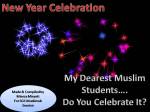
0. New Year CelebrationTahun Baru Masehi pun menjelang. Media, dari mulai TV (yang untuk tidak saya sambungkan ke antena) sampai medsos, sedang heboh-hebohnya mengkampanyekan dan mengsyiarkan gegap gempitanya si tahun baru ini. Pokoknya, barang siapa yang tidak merayakan tahun baru sepertinya nggak ngehitz banged. ~___~” 

Adakah yang salah dengan itu? Nope! Fine! Nggak apa-apa kok…. untuk yang bukan muslim. ^___^

Heh? Maksudnya?

Nah, bagi yang muslim, tentunya kita memiliki panduan dalam hidup alias A Way of Life dalam bahasa Sundana mah. Panduan itu disebut dengan Al Qur’an dan Sunnah Rasulullaah (salallaahu ‘alayhi wassalam). Daan… dalam panduan itu tidak sedikitpun disebutkan tentang perayaan ini. Bahkan, dalam hadits yang derajatnya sahih disebutkan bahwa Rasulullaah (salallaahu ‘alayhi wassalam) berkata kepada kaum jahiliyah terdahulu yang  merayakan hari Nairuz dan Mihrojan setiap tahunnya ketika beliau tiba di Madinah bahwa “Dulu kalian memiliki dua hari untuk senang-senang di dalamnya. Sekarang Allah telah menggantikan bagi kalian dua hari yang lebih baik yaitu hari Idul Fithri dan Idul Adha”. (HR. An Nasa-i no. 1556. Syaikh Al Albani mengatakan bahwa hadits ini shahih).  Jadi, perayaan umat Muslim itu yaa.. kedua hari raya tersebut.

Now wait.. maksudnya yang merayakan Tahun Baru itu kaum jahiliyah gitu? Ng… monggo simpulkan sendiri. Kalau saya (dan keluarga), insya Allah, nggak berani merayakannya.
Terus? Gimana dong? Dibilang nggak asik dong? Nggak nge-hitz dong?
Hiyaaaa… takut bener dilabel manusia. Takut tuh kalau dilabel Allah kalii… Inget lho, ”Barangsiapa yang menyerupai suatu kaum, maka dia termasuk bagian dari mereka” (Syaikh Al Albani mengatakan bahwa hadits ini shohih sebagaimana dalam Irwa’ul Gholil no. 1269.) 
Lengkapnya, silahkan tengok slideshow berikut yang sempat saya buat untuk disajikan setahun lalu dalam forum Muslimah Session SGS.
SOSE Resources

Remedial for SOSE

Salaam,
The following information is for students who happened to get Final  Exam score lower than the Standard of Achievement  (SOA ). Please make sure that the assignment is submitted by Wednesday,  18 December 2013 at 11.59 p.m to klastulistiwa@gmail.com. The list of assignment and students requiring to do it is as follow :

Grade 7 : Create comic about the history of Rome  for Haidar,  Ocean, Nabilla,  dan Nuran

Grade  8 : Created a poster or publication about the discoveries made by Muslim  and Renaissance’s scientists and inventors  for Mujahid,  Farel,  Nauval,  Diaulhaq,  Erdy,  and Ghozy.

Grade 9: Create a 200-words essay about the different views of Movements in Australia and Islam for Ataa and Angela

Well then,  that’s it…  I’ll be waiting until the dateline to have it finished and sent to the above mentioned email.

Good luck.  ^_______^

Lectures of Life

Daurah FULL – DAY Khusus Para Pendidik dan Pengelola Lembaga Pendidikan Islam tanggal 1 Januari 2014 nanti

image

Ada yang sayang untuk dilewatkan nih oleh para pendidik dan pengelola lembaga pendidikan Islam  – selain  untuk mengisi tanggal merah 1 Januari  tentunya. ^__^ v Berikut infonya:

Rabu, 1 Januari 2014 : Daurah FULL -DAY Khusus Para Pendidik dan Pengelola Lembaga Pendidikan Islam bersama Ustadz DR Erwandi Tarmizi dan M. A . dan Ustadz Kurnaedi , Lc . di Masjid Al – Barkah (GRATIS!)
Posted by Radio Rodja on Dec 11, 2013

TAPI…
1. Daurah ini hanya untuk PARA PENDIDIK DAN PENGELOLA Lembaga Pendidikan Islam , meliputi : Guru , Pengurus, Ketua,
Pembina, dan Pemilik Yayasan / Sekolah Islam .
2. PERSYARATAN adalah Membawa surat keterangan resmi sebagai tenaga pengajar / jabatan semisal di lembaga pendidikan Islam terkait .

WHEN,  WHERE,  WHO, WHAT, HOW ?
– Hari, tanggal : Rabu, 1 Januari 2014 / 8 Rabi’ul Awwal 1435
– Waktu: 09 :00 – 15: 00 WIB
– Pemateri dan Materi :
    1. Ustadz DR Erwandi Tarmizi, M.A . – “Manajemen Pendidikan Islam ”
    2. Ustadz Kurnaedi, Lc. – “Bingkisan Istimewa untuk Para Pendidik Generasi Islam ”
– Infaq: GRATIS a.k.a. FREE OF CHARGE
– Persyaratan : Membawa surat keterangan resmi sebagai tenaga pengajar / jabatan semisal di lembaga pendidikan Islam
– Tempat: Masjid Al – Barkah, Jl. Pahlawan Kampung Tengah , CIleungsi, Bogor, Indonesia
– Contact person : 021 – 8233661 / 081383245381

REMINDER
1. Daurah ini hanya untuk PARA PENDIDIK DAN PENGELOLA Lembaga Pendidikan Islam , meliputi : Guru , Pengurus, Ketua, Pembina, dan Pemilik Yayasan / Sekolah Islam .
2. PERSYARATAN adalah Membawa surat  keterangan resmi sebagai tenaga pengajar / jabatan semisal di lembaga pendidikan Islam terkait .

Ayo bantu sebarkan kepada saudara – saudara kita yang menjadi guru, pengurus, ketua , pembina dan pemilik
yayasan / sekolah Islam . Semoga bermanfaat. Jazakumullahu khoiron .

Sumber : www.radiorodja.com/rabu-1-januari-2014-daurah-full-day-khusus-para-pendidik-dan-pengelola-lembaga-pendidikan-islam-bersama-ustadz-dr-erwandi-tarmizi-ma-dan-ustadz-kurnaedi-lc-di-masjid-al-barkah-gratis/

Kalau ada yang penasaran dengan para pemateri, seperti saya, berikut saya salinkan hasil pencarian yang dilakukan dengan segenap jiwa dan raga tentang kedua ustadz di atas:

DR ERWANDI TARMIDZI, M. A. (diambil dari blog beliau http://erwanditarmizi.wordpress.com/about/):

Lahir di Pekanbaru 30 September 1974, menyelesaikan pendidikan D1 Pengajaran Bahasa Arab LIPIA, 1994-1995 S1 Syariah LIPIA, 1995-1999. S2 jurusan Ushul Fiqh, Fakultas Syari’ah, Universitas Islam Al Imam Muhammad bin Saud, 2001-2005. S3 jurusan Ushul fiqh, Fakultas Syari’ah, Universitas Islam Al Imam Muhammad bin Saud, 2006-2011.
Menjadi Supervisor Materi Keislaman Divisi Bahasa Indonesia situs http://www.islamhouse.com 2004-2006. Anggota tim pembuatan program e-book “Panduan Indeks Thesis dan Disertasi Fakultas Syariah”, Universitas Islam Al Imam Muhammad bin Saud, Riyadh, 2006-2007. Anggota tim pembuatan program e-book “Panduan Lengkap Muamalat”, Dewan Syariah, Bank Al Rajhi, Riyadh, 2007-2008. Manajer situs islam berbahasa indonesia http://www.islam-indo.org , 2008-2009 . Pengajar D2 Studi Islam di Kantor Dakwah Islam Rabwah (2003-2011), dan di Kantor Dakwah Islam Rawdhah (2010 -2011). Penulis tetap kolom Fiqh Kontemporer, majalah “Manhajuna” Riyadh, 2003- sampai sekarang. Penulis tetap kolom Fiqh Muamalat Kontemporer & kolom Halal-Haram, majalah “Pengusaha Muslim”, Agustus 2011- sampai sekarang. Thesis : “Al Atsar Al Ushuly li Qaidah Isytirath Al Qudrah Lit Taklif”. Disertasi: “Tahqîq Mazhab Shafi’iyyah Fîmâ Ikhtalafu Fîhi Min Al Masail Al Ushuliyyah Fî Mabâhitsi Al Hukmi As Shar’i Wa Al Adillah “. Terjemahan buku “Sejarah Mekkah”, Darussalam for Publishing, Riyadh , 2003. Terjemahan buku “Sejarah Madinah”, Darussalam for Publishing, Riyadh, 2003. Terjemahan buku “Riyadhushshalihiin”, Darussalam for Publishing, Riyadh, 2004. Terjemahan buku “Tanda-tanda Hari Kiamat, Tinjaun Masa Depan Dunia Islam”, Qisthi Press, Jakarta, 2004. Terjemahan buku “Obat Penawar Sihir”, Islamic International for Publishing House, Riyadh, 2006. Terjemahan modul “Pengantar Fiqh Perbankan Islam”, Ma’had Al ‘Aly lil Qadhaa’, Universitas Islam Al Imam Muhammad bin Saud, Riyadh, 2009. Harta Haram Muamalat Kontemporer, P.T. Berkat Mulia Insani, Jakarta, Februari 2012.

Pekerjaan :
1. Dosen tamu di program magister Perbankan Syariah Universitas Ibn. Khaldun Bogor.
2. Dosen tamu di program magister Managemen Bisnis Syariah IPB
3. Dosen tamu di program magister Ekonomoi Syariah Sekolah Tinggi Ekonomi Islam Tazkia Bogor
4. Dosen tamu di program magister Pemikiran Islam Kosentrasi Usul dan Fikih kelas Internasional Universitas Muhamadiyah Surakarta.

Kegiatan :
Pemateri fiqih kontenporer radio rodja, rodja TV bogor.

No contact : 087885853828

USTADZ KURNAEDI, Lc
Maaf, setelah mencari di internet dengan tetesan darah dan air mata,    saya tidak bisa menemukan profil beliau yang lengkap.  Namun,  memang nama beliau sering muncul sebagai tenaga pengajar lembaga -lembaga  pendidikan  Islam  dan pemateri kajian salaf.

Naaah….  berhubung saya dan keluarga tidak merayakan Tahun Baru  Masehi yang tidak begitu penting juga,  daurah ini akan menjadi menjadi tempat tujuan saya tanggal 1 Januari  nanti,  insya Allaah. Bagaimana dengan tanggal  1 Januari anda? ^____^

My Reflection

I’d never let my kids riding motorcycles before they get licensed!

Being a mom who follows the rules and regularly supervise your children in Indonesia is extremely painful. You can be judged as being too strict and weird. And that is who I am, or should I say, my stereotype… right now… -___-“

Taken from johnhoban.files.wordpress.com

It started when I had to go out from a company-owned site in a remote area in Lampung, Sumatra, (since I worked there for four years) to Bogor – one of big cities in Java, Indonesia. On the first weekend after moving to this housing estate or complex, I let the children playing outside under my supervision. I thought it was safe since I did the same thing in Lampung and I also saw many children playing and running in front of their houses. But, apparently, I realized that I made a WRONG decision. Suddenly, there was a motorcycle crossing the neighborhood without realizing that there were MINI HUMANS running on the street! And guess what, seeing their body size, I guess the rider was still a middle schooler or perhaps an upper primary student. Suddenly, there were like three or more motorcycles rode by CHILDREN around that age doing the same thing! I, spontaneously, took my children away from the street and have them sit down on the porch.

I shared the incident with other moms and most of them agree that Indonesian streets (including the ones inside housing complexes) are pretty dangerous for children. They also agree that the children need thorough supervision outside the house.
The discussion grew to the topic of underage children on motorcycles which means riding them. And voila… I was declared a heretic weird mom just because I don’t let my children ride motorcycles if they haven’t got the licence to ride it. They argued that it’s the condition that force them to take the decision.

“Condition? What conditions that would make a mother allow her children risking their lives on wheels???” I asked. Well, actually my question was not that explicit. I replaced the whole sentence by only two words “What conditions?”

“It’s too far to reach my child’s school. Letting them riding their own bikes is cheaper.” said one mummy.
“It’s a lot easier than to drive them.” said the other one.
“Coz my kid asked for it. I can easily buy it with cheap installment. “

I just stunned. Stunned on the way I view myself differently that perhaps is considered weird by the other mothers. I mean… seriously! Those are excuses to teach our children to disobey the law! Let’s carefully examine the ‘conditions’.

“It’s too far to reach my child’s school. Letting them riding their own bikes is cheaper.” 
Well, for me, this reason might be true if we want to take it from a nation’s perspective. Unlike Finland, the spread of quality education is not equal from one place to another. Sometimes, a ‘good school’ is located far from one’s neighbourhood. But, then, that would be a ‘intelligent excuse’. If I were the mother of the child (and I would) I would say: WAKE UP EARLIER, AND WALK! This is a lot more humane that letting them riding bikes. Now, my whole family wake up at 4 (the latest is when we hear the subuh adzan) to get ourselves prepared. We live in a place (in Bogor) where we have to reach the nearest public transportation in 30 minutes and we survive it by walking or having ourselves driven there by the dad. I inherited this habit also form my family who believe that “Good things are earned, not asked”.

“It’s a lot easier than to drive them.”  Again, excuses. If we really want our children to succeed life, we have to be the first role model. Waking up earlier to drive or ride them to school is one way to teach them the family value and hard work.

“Coz my kid asked for it. I can easily buy it with cheap installment. ” Well, hardly to say that the danger of riba and hedonism that seems to be easily accepted is viable to be the cause of this changing mindset. Just imagine, in Indonesia, only by paying Rp 500.000 for the down payment and paying 3 YEAR installment, a person can easily take home a motorcycle by only showing his ID card! This did not happen in a long time ago when I was a teenager.

And yes, it was already mentioned that there will be time that people take riba (interest) as something normal as Hazrat Abu Hurairah r.a. reported that the Prophet said : “A time will certainly come over the people when none will remain who will not devour usury. If he does not devour it, its vapour will overtake him.” [Ahmed,Abu Dawood,Nisai,Ibn Majah] THe times when even Muslims would forget that riba is haraam since we don’t return to Qur’an and Sunnah as the Noble Qur’an – Al-Imran 3:130 “O you who believe! Eat not Riba (usury) doubled and multiplied, but fear Allaah that you may be successful.:” Sad but true, but the ease of taking riba would make people starves to reach the tertiary needs as if its their primary one.

Well, this is merely my opinion as a mom and as a muslimah. Hope we all learn to raise our children to be stong generation of the future.

SOSE Resources

The Gold Rush

One of the topics taught for Year 9 SOSE lesson of  Year 9 is..

THE GOLD RUSH!

Some part of this lesson’s power point slides could be found on https://drive.google.com/file/d/0B7O3Bxh-4is4eE5OZlpkT2VQbEk/edit?usp=sharing . The movies watched in the classroom about Events leading to the Gold Rush and Eureka Rebellion could be found on Youtube.

And.. here’s the summary taken from THe Australian Government’s website…

There is no doubt that the gold rushes had a huge effect on the Australian economy and their development as a nation.

In 1851, Edward Hargraves discovered a ‘grain of gold’ in a waterhole near Bathurst. Hargraves was convinced that the similarity in geological features between Australia and the California goldfields (from where he had just returned) boded well for the search of gold in his homeland. He was proved correct. He named the place ‘Ophir’, reported his discovery to the authorities, and was appointed a ‘Commissioner of Land’. He received a reward of 10,000, plus a life pension. The discovery marked the beginning of the Australian gold rushes and a radical change in the economic and social fabric of the nation.

In 1852 alone, 370,000 immigrants arrived in Australia and the economy of the nation boomed.

The ‘rush’ was well and truly on. Victoria contributed more than one third of the world’s gold output in the 1850s and in just two years the State’s population had grown from 77,000 to 540,000!

The number of new arrivals to Australia was greater than the number ofconvicts who had landed here in the previous seventy years. The total population trebled from 430,000 in 1851 to 1.7 million in 1871.

The gold bullion that was shipped to London each year brought a huge flow of imports. The goldfield towns also sparked a huge boost in business investment and stimulated the market for local produce. The economy was expanding and thriving.

Because so many people were travelling to and from the goldfields, the 1850s also saw the construction of the firstrailway and the operation of the first telegraphs.

The rush to the rest of Australia

Following the gold rushes of NSW and Victoria, deposits were uncovered throughout the land. Only South Australia failed to produce any gold deposits of significance.

Multiculturalism on the goldfields

Chinese gold digger starting for work, circa 1860s.Chinese gold digger starting for work, circa 1860s. Image courtesy of State Library of Queensland: 60526 .

Soon after the discovery of the goldfields in Victoria an exodus of unprecedented volume started, bringing to Australia people with a range of skills and professions, unthought of prior to the discovery of gold.

Australia attracted adventurers from all around the world. The majority of these new arrivals were British but also included Americans, French, Italian, German, Polish and Hungarian exiles.The largest foreign contingent on the goldfields was the 40,000 Chinese who made their way to Australia.

In 1861, Chinese immigrants made up 3.3 per cent of the Australian population, the greatest it has ever been. These Chinese were nearly all men (38,337 men and only eleven women!) and most were under contract to Chinese and foreign businessmen. In exchange for their passage money, they worked on the goldfields until their debt was paid off. Most then returned to China. Between 1852 and 1889, there were 40,721 arrivals and 36,049 departures.

Racism

There were campaigns to oust the Chinese from the goldfields. The motivation was based on racism and fear of competition for dwindling amounts of easily found gold as the Chinese were known as untiring workers.

A simmering discontent

Diggers on the Turon fields, on the Turon River near Bathurst, had grown angry and had threatened to riot if the cost of licensing fees was not reduced. The monthly fee of 30 shillings for each claim was tough to pay in hard times and the claims were only 13.5 square metres on the surface, which made them difficult to work.

The governor of New South Wales, Governor Fitzroy, wisely reduced the fees by two thirds, but stood firm on the way it was collected, so resented by the diggers who called them the police ‘digger hunts’. Police would descend on the goldfields seeking out those diggers who had not paid their fees. Those who hadn’t paid were hauled before magistrates and fined 5 for the first offence. The fine doubled for each subsequent offence.

As the police digger hunts grew more unpopular, the police began using more and more force.

The Eureka Stockade

The Eureka Flag was based on the constellation of the Southern Cross.The Eureka Flag was based on the constellation of the Southern Cross. Courtesy of the Ballarat Fine Art Gallery and Australian Museums and Galleries Online.

Between 1851 and 1854 tension was building on the goldfields. Clashes between the miners and the authorities became more frequent with significant discontent brewing over the injustice of the goldfield licensing system and police corruption.

At Ballarat, the tension was rising quickly. The Ballarat Reform League was set up under the leadership of an Irish engineer, Peter Lalor. His fellow rebels were a passionate and colourful bunch, including a Prussian republican, Fredrick Vern; the Italian redshirt, Raffaelo Carboni; and the Scottish Chartist, Tom Kennedy.

In December 1854, 1000 men gathered at Eureka, on the outskirts of Ballarat and unfurled their flag, a white cross and stars on a blue field, to proclaim their oath:

We swear by the Southern Cross to stand truly by each other, and fight to defend our rights and liberties.

In a tragic climax to the rising tensions, troops from Melbourne overran the stockade and killed 22 of its defenders.

Vindication

Juries in Melbourne refused to convict the rebel leaders who were put on trial for high treason. A Royal Commission condemned the goldfield administration and the miners’ grievances were remedied. Their demands for political representation were also met. Within a year, Peter Lalor – the leader of the rebels – became a member of the Victorian parliament.

The end of transportation

The discovery of gold in NSW and Victoria accelerated the abolition of convict transportation to the east coast of Australia, and ultimately to the nation as a whole. By continuing to send convicts to the eastern colonies, it was, in effect, giving free passage to potential gold diggers. And why would the new convict arrivals want to work for a living when a fortune awaited them on the goldfields

Source: http://australia.gov.au/about-australia/australian-story/austn-gold-rush


And here is the the review questions for this chapter:

  1. Who is Edward Hammond Hargraves?
  2. Why is it said that Hargraves’s luck is not in America, but Australia?
  3. What happened to convicts who said he found gold and what did they finally do?
  4. What turned the trickle of miners heading for Ophir into flood
  5. What diseases that were suffered by the diggers?
  6. What happened to diggers without licences?
  7. What was the actual cause of Eureka Stockade?
  8.  What made the Chinese diggers different from the others?
  9. Why did the bushrangers chose the career?
  10. Mention two reasons why the police wanted Ned Kelly dead?
  11. Mention two reasons why Ned Kelly is considered a hero!
  12. Who was Constable McIntyre?
  13. Explain in points about political independence after the Gold Rush?
  14. Explain in points about transport & communication system changes after the Gold Rush?
  15. Explain in points about the cultural growth after the Gold Rush?
  16. Explain in points about economic strength after the Gold Rush?
  17. Explain in points about population boom after the Gold Rush?
  18. Explain in points about damaging ‘seeds’  after the Gold Rush?

GOOD LUCK

SOSE Resources

Medieval Age

Yaay, finally we have finished discussing about the Medieval Life topic! It was such a breathtaking experience in taking the students to really ‘experience’ what really happened during those times. The loudest gasps were at the time I showed them the video of ‘torturing devices’ used for the trial and when we watched the history of Black Death. 

Following is the link to obtain the slides:

https://docs.google.com/file/d/0B7O3Bxh-4is4YzEteHp0VTRDRGc/edit?usp=sharing

We also opened a Medieval Village that have the students explaining about every aspects of medieval life to their peers. Hopefully, by doing it, the students would have comprehended these aspects:

  • Explaining the aspects influenced in the Middle Ages
  • Elaborating the effect of Feudalism and explain the rise of middle class
  • Illustrating the feasts and festivals
  • Describing the roles of Catholic churches
  • Explaining about ways laws are implemented, incl. to Joan of Arc
  • Depicting the signs to impacts of the Black Death
  • Explaining the raise of people power

Image


SOSE Resources

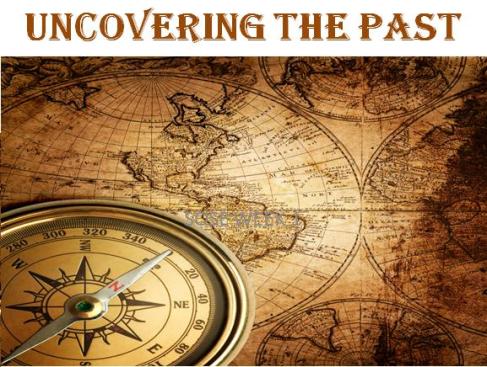
Uncovering the Past and Ancient Egypt

It is true that the history is so fascinating. We can learn and relearn from it as it would teach us not to do the ‘sam mistakes done in history.”

Well, those were the things learnt by Year 7 Al Taqwa College students for this term. Theyl earnt that to uncover the  history, some evidences have to be gathered, analyzes, before a hypotheses is taken. Yup… a hypotheses, ladies and gentlemen… So the history can be ‘re-concluded’ once there are new evidences found.

Well, basically, for the first chapter, Uncovering the past, I would expect the students to master these points:

  • Tracking history and explore reasons to study it
  • Explaining the jobs of historians and related experts
  • Evaluating evidence (incl. facts and opinions) through the methods
  • Describing the periods and block of history
  • Explaining about civilization
  • Keeping an open mind on hypotheses & mystery

As for the link of the slide can be clicked for this chapter is: https://docs.google.com/file/d/0B7O3Bxh-4is4WEFMeFFoMWs3Um8/edit?usp=sharing

Image


As for the second chapter, we learnt the beauty of the Ancient Egypt, from the civilization, mummification, and even the gods they believed. One student said that he felt a mythical feeling when he watched the movie about gods… spooky, isn’t it?

Well, hopefully after the weeks we spent, the students would have understood these points:

  • Covering aspects i.e. living arrangements, women’s roles, hieroglyphics, trade & craft, religion, pyramids, burial practices & mummification, 
  • Looking at aspects above that changed over time over time; develop timelines on key events in ancient Egypt

Parts of those points (since I also used some Youtube videos and worksheet) could be read on the slide I posted on this link: https://docs.google.com/file/d/0B7O3Bxh-4is4dkk5dHZhVm9jdkU/edit?usp=sharing. 


Image


SOSE Resources

The Vikings 2: SOSE Resource for Year 8

Salaam,

It is such a fun thing to know about ancient civilization in another part of the earth. The ancient one that we have come into is the civilization of Vikings. In Al TAqwa College, Indonesia, we have learnt this one with an active earning method where the students learn using bus stop system as initial learning. The system is like this:

  1. Every group created 5 question of designated chapter, including the answer.
  2. Then, arrange the grouped-tables in circle so every group can have their turn to answer every other group answer
  3. Finally, ask each group to go to other group’s table to answer their questions in every 15 minutes.

This method, for sure, is not the best method to learn. But, at least, the students read the book they have and they also learn to cooperate as a group.

Image

Seeing the students worked, to be honest, make me proud of them. They really strived to finish the task given with the expected manner. Hopefully, they would always have the same manner in every single thing that they do. Amiin.

And finally, here are the outcomes expected from this chapters where the students are able to:

  • Explain the Vikings’ origin, community life, Norse language, and myths
  • Elaborate the roles of beserkers
  • Retell about Viking navigation
  • Illustrate the Viking community life
  • Develop ideas on the End of the Viking Era

Following is the link of the slides used in the classroom: https://docs.google.com/file/d/0B7O3Bxh-4is4dlpfOGdsRExpdHc/edit?usp=sharing . Please be well-informed that the slides do not cover every detail of the learning since the other sub-chapter are done throughout the lessons using various formats.

SOSE Resources

The Europeans Arrive: 2nd SOSE Resource

Salaam,

In this two weeks, Secondary 9 Al Taqwa College, Indonesia, student have covered the hostory of how Europeans arrived in Australia. For other visitors, please not to get surprised of the material. Perhaps some of you wonder, why Indonesian students study about Australia. It is because the curriculum that I use to teach them is AusVELS (Australian  Victorian Essential Learning Standards) since Al Taqwa Colledge’s parent school is in Australia .

Basically, the students are expected to be able to:

  • Explain the beliefs of Ancient Greek geographers
  • Describe the finding of Botany Bay
  • Explain about Captain Arthur Philllip
  • Describe how convicts transported to Australia and their lives, incl. the female factories
  • Illustrate Macquarie, Melbourne, & new immigrants
  • Portray the whaling colony

Image

The slides of the materials conveyed can be taken from https://docs.google.com/file/d/0B7O3Bxh-4is4TEx2OHR3WTdFX3M/edit?usp=sharing  Hope it helps to better comprehend the lesson. 🙂

Lectures of Life, My Reflection

Luqman Wisdom: The Beauty of Qur’an for Parents and Educators

I shed my tears when I read it, remembering the way I treated my beloved children. Alhamdulillah, we have these in the Qur’an… our quidance as parents and educators of the next generation of Muslims…. (Reference: http://quran.com/31/12-19)

31:12

And We had certainly given Luqman wisdom [and said], “Be grateful to Allah .” And whoever is grateful is grateful for [the benefit of] himself. And whoever denies [His favor] – then indeed, Allah is Free of need and Praiseworthy.

Dan sesungguhnya telah Kami berikan hikmat kepada Luqman, yaitu: “Bersyukurlah kepada Allah. Dan barangsiapa yang bersyukur (kepada Allah), maka sesungguhnya ia bersyukur untuk dirinya sendiri; dan barangsiapa yang tidak bersyukur, maka sesungguhnya Allah Maha Kaya lagi Maha Terpuji”.

31:13
And [mention, O Muhammad], when Luqman said to his son while he was instructing him, “O my son, do not associate [anything] with Allah . Indeed, association [with him] is great injustice.”

Dan (ingatlah) ketika Luqman berkata kepada anaknya, di waktu ia memberi pelajaran kepadanya: “Hai anakku, janganlah kamu mempersekutukan Allah, sesungguhnya mempersekutukan (Allah) adalah benar-benar kezaliman yang besar”.

31:14
And We have enjoined upon man [care] for his parents. His mother carried him, [increasing her] in weakness upon weakness, and his weaning is in two years. Be grateful to Me and to your parents; to Me is the [final] destination.
Dan Kami perintahkan kepada manusia (berbuat baik) kepada dua orang ibu-bapaknya; ibunya telah mengandungnya dalam keadaan lemah yang bertambah-tambah, dan menyapihnya dalam dua tahun. Bersyukurlah kepada-Ku dan kepada dua orang ibu bapakmu, hanya kepada-Kulah kembalimu.

31:15
But if they endeavor to make you associate with Me that of which you have no knowledge, do not obey them but accompany them in [this] world with appropriate kindness and follow the way of those who turn back to Me [in repentance]. Then to Me will be your return, and I will inform you about what you used to do.
Dan jika keduanya memaksamu untuk mempersekutukan dengan Aku sesuatu yang tidak ada pengetahuanmu tentang itu, maka janganlah kamu mengikuti keduanya, dan pergaulilah keduanya di dunia dengan baik, dan ikutilah jalan orang yang kembali kepada-Ku, kemudian hanya kepada-Kulah kembalimu, maka Kuberitakan kepadamu apa yang telah kamu kerjakan.
31:16
[And Luqman said], “O my son, indeed if wrong should be the weight of a mustard seed and should be within a rock or [anywhere] in the heavens or in the earth, Allah will bring it forth. Indeed, Allah is Subtle and Acquainted.
(Luqman berkata): “Hai anakku, sesungguhnya jika ada (sesuatu perbuatan) seberat biji sawi, dan berada dalam batu atau di langit atau di dalam bumi, niscaya Allah akan mendatangkannya (membalasinya). Sesungguhnya Allah Maha Halus lagi Maha Mengetahui.
31:17
O my son, establish prayer, enjoin what is right, forbid what is wrong, and be patient over what befalls you. Indeed, [all] that is of the matters [requiring] determination.
Hai anakku, dirikanlah shalat dan suruhlah (manusia) mengerjakan yang baik dan cegahlah (mereka) dari perbuatan yang mungkar dan bersabarlah terhadap apa yang menimpa kamu. Sesungguhnya yang demikian itu termasuk hal-hal yang diwajibkan (oleh Allah).

31:18
And do not turn your cheek [in contempt] toward people and do not walk through the earth exultantly. Indeed, Allah does not like everyone self-deluded and boastful.
Dan janganlah kamu memalingkan mukamu dari manusia (karena sombong) dan janganlah kamu berjalan di muka bumi dengan angkuh. Sesungguhnya Allah tidak menyukai orang-orang yang sombong lagi membanggakan diri.

31:19
And be moderate in your pace and lower your voice; indeed, the most disagreeable of sounds is the voice of donkeys.”
Dan sederhanalah kamu dalam berjalan dan lunakkanlah suaramu. Sesungguhnya seburuk-buruk suara ialah suara keledai.
Hopefully, these will be my reminder to learn to be a better parent and educator every single day. Amiin. :’)
SOSE Resources

First Australians-The First Resource for Y9 Students

My dearest SOSE Students of Y9 Al Taqwa College. Here are the things that I hope you have covered for the first unit of SOSE – First Australians:

    • Describing the origins of indigenous people and language groups
    • Explaining the indigenous lifestyle, conflicts, effects & reaction of Indigenous people and Europeans.
    • Describing the resistance of Indigenous, genocide, and massacres.
    • Retelling about Corranderk and Torres Strait Islanders

The full slide can be downloaded from https://docs.google.com/presentation/d/1vA0YFsJdOeztxMX4wFXNmf1yzf8iUaw-eWzn69HM2IY/edit?usp=sharing

What you have to do is:

  1. Click the link and
  2. When you see the option FILE, click and scroll down to choose DOWNLOAD AS (up to you what format you want to have.

Now, we have come to the time of submitting the narrative story (It’s been 2 weeks already!). Be well reminded that the post that will have perfect score is the ones submitted on September 9, 2013 at 11.50 p.m. If you submit later that the due date, it is still accepted with minus 10 for maximum scoring. For example, if you submit on September 10, your maximum score is not 100 but 90. You are still allowed to have revisions even when you have submitted the work.

The descriptors for the work (taken as English and SOSE projects) are as follows:

  1. Having it in a form of narrative story with one make-up character taken from the chapter
  2. Having at least one real historical account taken from the first chapter (First Australians)
  3. Having the tenses of simple past and present perfect

Good Luck! 🙂


My Reflection

What Makes (a) Teacher Happy in a Classroom

Countless literatures have suggested lots of things for teachers to learn to make sure the students happy. But, how many readings really show what things students could do that could make teachers happy? (At this point, if you are a student, you may say “What?” – or if you are a teacher, you may say “Finally!”)

Umm.. this post – however – does not really talk the scientific ways. What I want to say is something natural… something expected by humans… since teachers ARE humans, right?  So this post would view my one-and-only point of view after teaching for more than 8 years in schools with different systems and cultures.

So, here we go with the list of things that could make a teacher (read: ME) happy.

1. Being warmly greeted 

Well, this is normal, I believe. But honestly, as a teacher,  I would be very happy if a student (the ones I teach or not) greet me. A simple smile would be enough should ones don’t feel like greeting. 🙂

2. Being listened to

This what makes it super different between hearing and listening. When you listen, you really put the effort of trying to figure out “What in the world is this person talking about, eh?” It really erases my fatigue of preparing those lesson plans and teaching preparation. Well, for sure, sometimes I do not make myself clear. If that happens, it would lead to my next happiness…

 3. Being asked (while teaching)

This factor is following factor number 2: being listened to. Sometimes, I vibe different ‘frequency’ or ‘language’ when I explain or present something in front of people. Then, if my listener(s) ask questions related to my presentation – not like, “May I go to the rest room?” type of question – I would be super happy! Any kinds of questions would enrich both sides of the parties and  make the brain think!

4. When students/ audience do what is told

This last but not least item is the most important one, I assume. It really highlight everything I have been explaining. Well, I am the kind of teacher who believes in the magic of ‘active learning’. I’ve been seeing examples of how my students still ‘use’ it even after they graduate. They still remember what they have acquired in my classroom (not what they listen). So, if they do what they are told, it will (insyaAllah) bring benefits for them. Their body will help ‘memorizing’ the things I am supposed to teach.

My Students: Source of Happiness

Basically, those would be all I could remember (and type) about the things that make me (as a teacher in  a classroom) happy. Actually, there are more than just four. But for now, having those for has made me more than grateful for being a teacher.

My Reflection

Teleconference dan Rasa Lapar

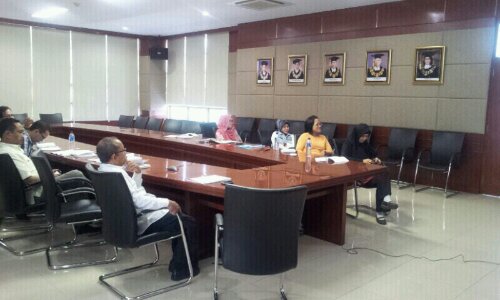
Hari Minggu ini pertama kalinya saya, setelah selama 1 tahun kuliah, berada di sesi kuliah umum dengan metode teleconference. Kelas yang saat itu dibuka adalah Manajemen Stratejik. Tema yang diberikan adalah Institusi dan Biaya Transaksi.

Karena kuliah umum ini bersifat teleconference, maka mahasiswa tidak perlu meninggalkan kursinya menuju tempat kuliah umum – yang jika dilaksanakan secara konvensional, maka mahasiswa akan mendatangi tempat yang bisa menampung orang banyak. Dengan pola ini, si gadget penghubunglah yang mendatangi mahasiswa…

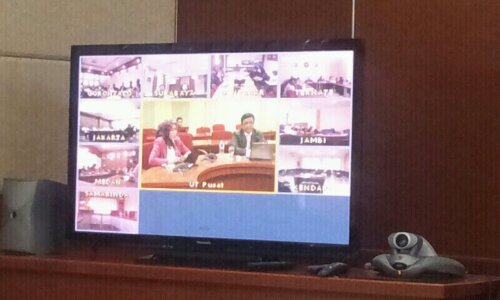
Kembali ke kuliah umum via teleconference di UT. Teleconference ini dilakukan dengan 7 UPBJJ UT yaitu Medan, Jambi, Ternate, Denpasar, Surabaya, Gorontal, dan tentu saja UPBJJ saya yaitu Jakarta.

image

Well… ide awalnya sih baik dan keren. Semua tahu kalau teleconference tidak murah, bukan? Sayang, pelaksanaannya kurang tertata.

Dikatakan bahwa kuliah umum ini berhubungan dengan kuliah Manajemen Stratejik yang baruuuu saja selesai. Yup! Kuliah umum ini dilaksanakan pada saat kami seharusnya istirahaaaat. Huuhuuu… kami dilarang makaaan… Entah dengan yang lain tapi bagi saya ITU MASALAAH! Ayolaaah… saya lapar… mana bisa mikir atuh!

image

Selain itu, menurut saya siiih… seharusnya agenda sepenting ini diinformasikan minimal sehari sebelumnya. Tapi ini.. oh no no no… kami dicegat keluar beberapa detik sebelum teleconference dimulai… I mean.. come oooon! Bahkan bioskop misbar (gerimis bubar) pun mengumumkan dulu via karang taruna. Seharusnya.. seharusnya…

Ah sudahlah… saya lapar.

-Masih akan terjebak di ruangan ini hingga satu jam ke depan.

My Reflection

Cambridge v.s. IB Curriculum in My Opinion

Fiuuuh… akhirnya 3 minggu pun berlalu. 3 minggu yang superrr sibuk menyiapkan kurikulum baru yang bernama IGCSE dan A-Level ala Cambridge Int’l Examination.

Selama 3 minggu itu juga saya terseok-seok menyiapkan siswa dalam menghadapi IGCSE dan A-Level. Sungguh! Bukan karena betapa banyak paperwork yang harus disiapkan atau betapa riweuh persiapan sebelum memulai pelajaran, tapi lebih karena saya seakan-akan HANYA menyiapkan otak mereka saja untuk menghadapi masa depan. Honestly, I felt like I’ve been threatening the students that they would not pass the TESTS if they don’t.. bla.. bla.. bla.. Bagaimana tidak, dari awal, saya sudah diwanti-wanti untuk menjelaskan jenis-jenis tes yang akan mereka ambil hingga preference sang penguji. Memang sih, CIE memberikan banyaaak sekali panduan yang kumplit… plit… plit… Silabus hingga Scheme of Work-nya lengkap dari minggu pertama hingga terakhir. But.. it’s only that!

Mungkin yang sedang membaca posting ini ada yang bertanya,

“So, what do you expect, Mierza???”

Well, I see it from managerial and parental points of view. Seriously, I haven’t seen the curriculum really integrates a holistic school system. It merely improves COGNITIVE. Yup… Cuma otak saja. (Maaf) Padahal.. come oooon… everyone knows that it takes more than your brain to really become ‘something’! Bayangkan jika si sekolah hanya mengandalkan kurikulum ini dalam sistemnya tanpa penambahan sistem yang mendorong ahlak atau karakter yang baik… Akan jadi apa generasi yang tercetak nantinya?

Mungkin hingga paragraf di atas, anda akan bertanya:

Jadi, kembali lagi sama sekolahnya dong? Tapi kalau sekolahnya bagus membuat sistem yang mendukung karakter yang diharapkan, tidak apa-apa kan? Sekolah kami punya program yang bagus kok untuk menjadikan siswa berkarakter. Dll.. dst.. dsb… dllaj…

Maka saya akan katakan disini bahwa saya tidak membicarakan sekolah yang menjalankan, tapi si sistem/ kurikulum itu sendiri yang diadopsi oleh sekolah. Sistem yang ditawarkan Cambridge Int’l Examination HANYA menawarkan sertifikasi. Coba lihat kutipan di bawah ini dan cermati apakah sistem tersebut menawarkan juga cara mengembangkan karakter anak didiknya?

“We are the world’s largest provider of international education programmes and qualifications for 5–19 year olds. More than 9000 schools in over 160 countries are part of the Cambridge learning community. Cambridge programmes and qualifications are progressive and flexible, helping schools develop successful students.” (http://www.cie.org.uk/)

Hmmm… “develop successful students?” Silahkan jawab sendiri pertanyaan: “What kind of successful students are we talking about?”

Saya jadi terbayang-bayang lagi ketika saya mengajar di sekolah IB. Sepengalaman saya…. sistem yang ditawarkan IB,  sangat memperhatikan bagaimana ahlak/ karakter itu menjadi poin penting dalam perkembangan pendidikan si anak. Seingat saya juga, IB memiliki satu tema sentral yang dipakai setiap 6 minggu. Tema-tema itu, menurut saya, sangat down-to-earth. Bener-bener realistis.  Terkoneksi dengan kehidupan saat ini dan solusi untuk kehidupan yang akan datang. Dan (ini setahu saya lho, yang pernah mencicipi IB), sistem ini memberikan label ‘IB learner profile’  sebagai bagian dari tujuan pendidikan yang diusungnya, seperti: inquirers, knowledgeable, thinkers, communicators, principled, open-minded, caring, risk-takers, balanced, dan reflective. Dengan begitu, maka bisa disimpulkan bahwa IBO berani mengatakan (dalam kata-kata saya sendiri) “We develop more than your brain” dan ini berlaku pada semua sekolah yang menerapkan IB – tidak tergantung pada bagus atau tidaknya sistem atau program sekolah tersebut. Lihat saja bagaimana IB menampilkan apa yang disebut dengan pendidikan internasional (http://www.ibo.org/programmes/index.cfm):

  • Developing citizens of the world in relation to culture, language and learning to live together
  • Building and reinforcing students’ sense of identity and cultural awareness
  • Fostering students’ recognition and development of universal human values
  • Stimulating curiosity and inquiry in order to foster a spirit of discovery and enjoyment of learning
  • Equipping students with the skills to learn and acquire knowledge, individually or collaboratively, and to apply these skills and knowledge accordingly across a broad range of areas
  • Providing international content while responding to local requirements and interests
  • Encouraging diversity and flexibility in teaching methods
  • Providing appropriate forms of assessment and international benchmarking

Apakah program yang diatas HANYA menampilkan bagian akademik saja? I don’t think so. Pantas saja banyak sekolah yang sudah keburu mengadopsi Cambridge International Examination programs juga mengintegrasikan IB ke dalam sistem sekolahnya. Bukankah kita menginginkan anak-anak kita untuk cerdas dalam segala hal yang lebih dari sekedar pelajaran?